

chickens
Flock Management
staggered replacement
Staggered Replacement chicken
management is when you partially replace your flock with young
hens and cull the oldest ones.
The main advantage is that egg production is more even than that of the All In All Out management system. The main disadvantage is that you disrupt the pecking order by introducing new chickens to your flock.
The main advantage is that egg production is more even than that of the All In All Out management system. The main disadvantage is that you disrupt the pecking order by introducing new chickens to your flock.
advantages/disadvantages summary
Advantages
- More even egg production.
Disadvantages
- Adding young chickens to an established flock interrupts the
social structure of the flock, sometimes known as the pecking order.
- There is a risk of introducing new parasites and diseases every time you add pullets to the existing flock.
staggered replacement schedules
A staggered replacement schedule refers to what proportion of the flock do you
replace and how often do you replace them. There are many
replacement schedules that you can use. Below are two suggested replacement
schedules for a flock of six hens.
I have chosen six as this number will provide more than enough eggs for
the average family. It is best to replace chickens in late Spring so they begin laying in December or January (Southern Hemisphere). Late Spring chickens will miss the Autumn moult and continue to lay eggs through to the following Autumn.
two year staggered replacement
schedule
| YEAR | ACTION |
| 0 | Buy 4 pullets (point of lay young hens) |
| 1 | Add 2 pullets to the flock. |
| 2 | Cull 3 of the 4 oldest hens, choosing the ones that are in the poorest condition and buy 3 more pullets. |
| 3 + | Thereafter cull the 3 oldest hens and replace with 3 pullets each year. |
three year staggered replacement
schedule
| YEAR | ACTION |
| 0 | Buy 4 pullets (point of lay young hens) |
| 1 | Add 2 pullets to the flock. |
| 2 | Leave the flock as is |
| 3 | Cull 2 of the 4 oldest hens, choosing the ones that are in the poorest condition and replace with 2 new pullets. |
| 4 + | Thereafter cull the 2 oldest hens and replace with 2 pullets each year. |
If you lose any hens to disease or predators then simply replace them without culling any of the older hens. If possible try and replace lost birds at the same time you would have done the scheduled partial cull.
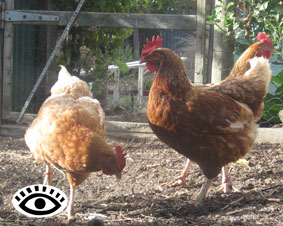
Chickens in their second year with red spiral bands on their legs.
It is my practice to leave the first year hens untagged, only band them when they reach their second year. If running chickens using a three year staggered replacement schedule you will need two different coloured bands or simply add an extra band when the hens reach their third year.
I use spiral bands as they are less obtrusive and appear to be more comfortable than flat bands.
Most farm supply shops sell poultry leg bands. My spiral leg bands were bought from Bellsouth
UPDATED 29TH JUNE, 2016