
vegetable
patch design
Wicking Beds
wicking bed pros and cons
Below is a summery of wicking bed
advantages and disadvantages to help you decide whether a wicking
bed will
meet your gardening needs.
Advantages
- Use between 40 and 50% less water than a conventional garden
bed.
- Harder for weeds to establish as the soil on the surface is
drier.
- Watering is semiautomatic, so it is possible to go away for
two or three
weeks at a time without your wicking bed drying out.
- Can be entirely watered by a low pressure water system,
meaning it can be
directly connected to a water tank without the use of a pressure pump.
- Ideal for gardens that have trees with invasive roots or are infested with Couch grass as it is very difficult for tree roots and Couch runners to penetrate into a wicking bed.
Disadvantages
- Much more expensive to build, approximately three to four times the
cost of a conventional raised garden bed.
- As the design is more complicated they take longer to
build and require a higher level of building skills.
- When the reservoir has water in it the underlying soil remains much
damper, which can be a problem for vegetables that prefer
dryer conditions.
- Use a lot more materials to build than a conventional garden bed
illustrations
comparing standard and wicking beds
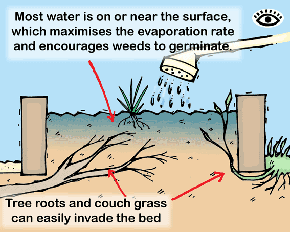
Problems associated with
a standard raised bed.
a standard raised bed.

Advantages of a Wicking bed